Em caso de dúvidas preencha o formulário a baixo
 Chapman University, Orange, CA
UC Santa Barbara, Santa Barbara, CA
Chapman University, Orange, CA
UC Santa Barbara, Santa Barbara, CA
 IDOR, Rio de Janeiro
 University of Freiburg, Freiburg
LMU Munich, Munich
University of Freiburg, Freiburg
LMU Munich, Munich
 Eötvös Loránd University, Budapest
You have selected:
Please confirm your selection:
telepathy
te·lep·a·thy n
Claims for the direct transmission of information, at a distance, between people, despite full sensory shielding
experiment
ex·per·i·ment n
A scientific analysis or procedure whose objective is to investigate a particular phenomenon
Over the past 50 years, many laboratory studies have claimed evidence for telepathy when the so-called “Ganzfeld protocol” was applied.
Now, a large-scale metascientific replication project is being undertaken to examine whether the extraordinary claim of the existence of telepathy, as reported in these studies, can be confirmed through rigorous and advanced scientific methodologies. Six laboratories from the United States, Europe, and South America, and nine Principal Investigators, collaborated to design and execute the protocol.
This website was created to invite you to support this project as a participant in the experiment. For information on the scientific and technical aspects of this multi-laboratory replication project, please visit the website of the Paradox Science Institute, which developed, funds and organizes this research:
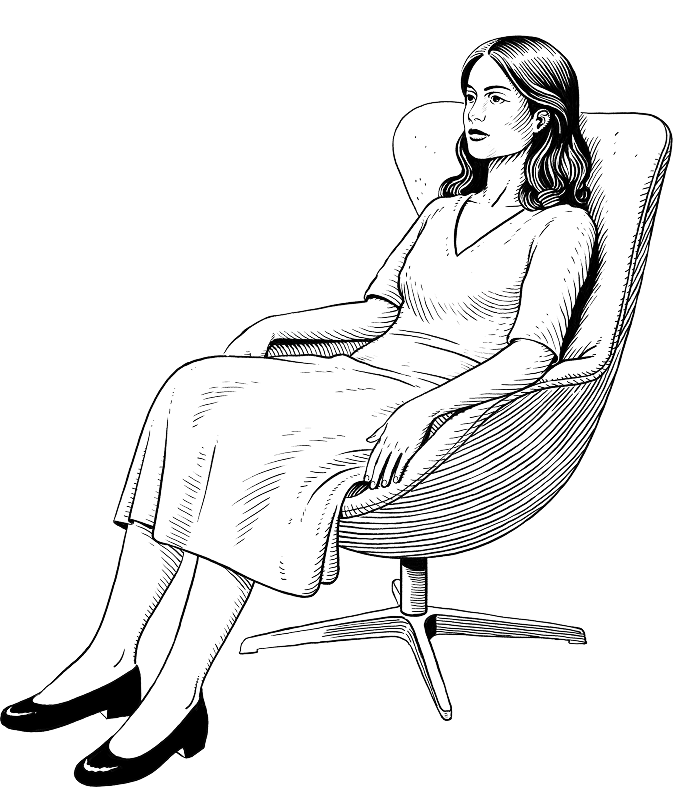
In the Ganzfeld protocol, two individuals participate in the experiment in separate rooms, sensory-shielded one from the other: one assumes the role of sender, attempting to mentally transmit the content of a video, while the other, the receiver, freely reports the perceptions and impressions that arise in their mind.
After 25 minutes of transmission, the receiver is shown four different videos, one of which is the transmitted video. Their task is then to identify which video was the target.
The hit rate obtained across the set of sessions makes it possible to assess whether the results are compatible with the 25% average success rate expected by chance or whether they exceed this value, thereby providing evidence in favor of the telepathy hypothesis.
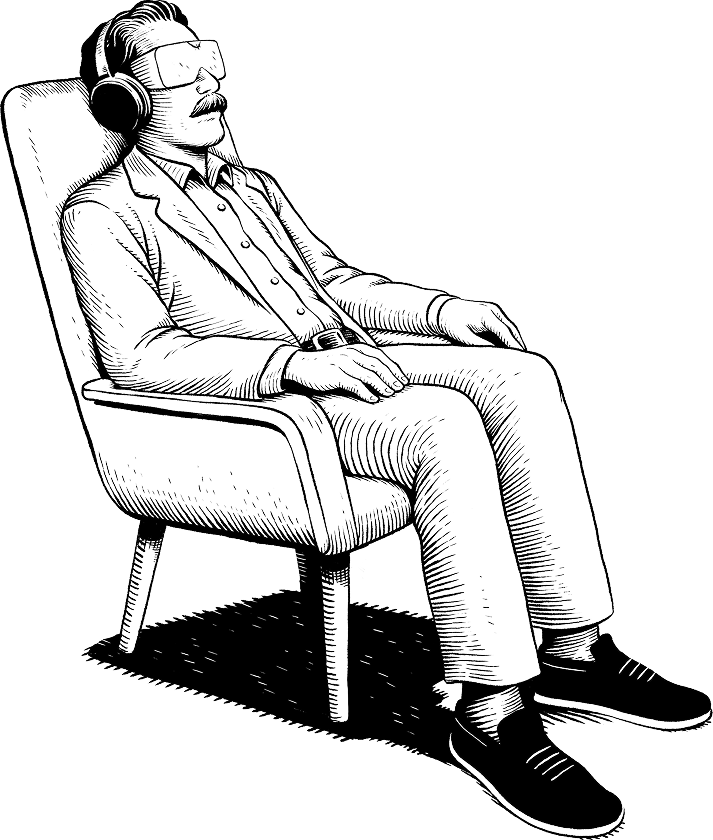
It is a state induced by perceptual deprivation: the receiver wears goggles that produce a uniform red light without defined shapes, while listening to a continuous sound (white noise) through headphones. This procedure reduces external sensory stimuli, promoting greater focus on one’s own mental images and internal sensations.
The rationale is that, with reduced sensory distractions, the mind may become more sensitive to subtle signals, including the purported telepathic information.
Click the “Participate” link and complete the screening questionnaire to determine whether you are eligible for the study. You may indicate a preferred partner with whom you would like take part in the experiment; however, participation is also possible without a pre-existing partner, in which case the organizers will pair you with another registered participant. No prior experience is required — curiosity and an open mind are sufficient.
Participation takes place in person and lasts approximately 100 minutes overall — including preparation, instructions, relaxation and the experimental session. Additional relevant details — such as location, eligibility criteria, and practical guidelines — will be provided to participants in advance.
This initiative applies rigorous and advanced methodologies in both experimental design and session conduct. These include enhanced control procedures and systematic participant monitoring, aimed at minimizing bias and reducing the risk of fraud.
The research is conducted in collaboration with international centers, enabling the collection of one of the largest datasets assembled to date for this type of investigation, thereby ensuring high statistical power and the robustness of the results.
For more details on the scientific rationale and the technical aspects of this replication project, please visit the website of the Paradox Science Institute:
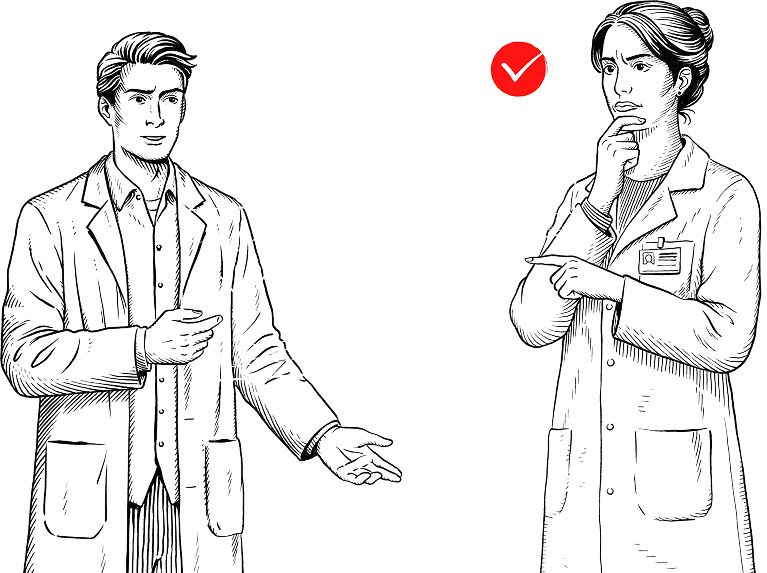

The experiments are being conducted simultaneously at multiple research centers around the world, through a collaboration among different universities and institutes that follow the same standardized protocol.
The experiment will take place at the following centers:
It is a scientific research that investigates the possibility of information transfer between individuals beyond known sensory channels, commonly referred to as telepathy. Rather than a single isolated study, it is an international collaboration involving multiple laboratories across different countries, with pre registered protocols, rigorous criteria, and joint data analysis. The goal is to produce robust and transparent scientific evidence.
The Paradox Science Institute conceived, funded, and promotes this research. For additional information on the technical aspects of the GML Project, please visit the Paradox Institute website.
https://paradoxscience.org
The goal of this research is not to “prove” the existence of telepathy, but to test this hypothesis in acareful and rigorous way. In this project, multiple laboratories follow the same protocol to examine whether, collectively, participants’ results exceed what would be expected by chance alone. The idea is to collect data in a standardized, transparent, and replicable manner, in order to assess whether any consistent effect emerges or whether the results remain with in what would be expected by chance.
Each session lasts approximately 100 minutes, including instructions, preparation, and execution ofthe experiment.
Yes, you can. One of the modalities included in the Ganzfeld Protocol involves participation in pairsformed by individuals who share a connection, such as close friends, family members, partners, or anyone with whom you feel a sense of affinity. If you know someone you feel comfortable with and would like to take part in the experience together, this is possible and even encouraged. Both participants need to register and indicate, at the time of sign-up, that they wish to participate as apair.
Yes, but in different roles. You may participate once as a sender and once as a receiver, either with the same partner or with different partners.
Ideally, participation should occur on different days. However, exceptions may be considered incases of practical constraints – for example, participants from other cities with limited availability.
Yes. There are some basic requirements for participation, which will be assessed through the registration form. In general, participants must be adults, able to understand the instructions clearly, not under the influence of alcohol or other substances, and not experiencing a significant physical or mental health crisis.
For safety reasons, individuals with certain specific conditions – such as epilepsy, extremesensitivity to light or continuous sounds, or severe uncorrected hearing or visual impairments – will not be able to participate. In case of doubt, each situation is discussed with the research team, which evaluates together with the participant whether participation is appropriate.
The experiment is considered safe and low-risk. It is a non-invasive psychological procedure: nomedications, needles, shocks, radiation, or any physical interventions are involved.
The sender watches a video (validated in previous experiments) repeatedly, with intervals inbetween. The receiver remains seated in a reclining chair, wearing goggles that produce a uniformred light without defined shapes, while listening to a continuous sound (white noise) through headphones.
Some participants may experience mild discomfort, such as fatigue, drowsiness, boredom,sensitivity to light or continuous sound, or slight anxiety from having their eyes covered. For thisreason, participants may request to stop at any time, ending the session altogether.
The entire procedure has been reviewed by a research ethics committee, and the team is trained tomonitor participants’ well-being throughout the experiment
The experiment is not intended to induce hallucinations, and participants are not expected to “seethings as if they were actually present in the environment.
”What may occur in some individuals are very vivid mental images – scenes, colors, shapes, orinternal sensations – that the person recognizes as originating from their own mind, not from theexternal world. This is similar to experiences that can occur when we are about to fall asleep or deeply absorbed in a daydream
When such experiences occur, they are typically temporary and fade once the session ends or when the participant opens their eyes, moves, and returns to a normal state. Throughout the session, participants remain aware of where they are, can communicate normally with the experimenter, and may stop the experiment at any time if they feel uncomfortable.
What matters scientifically is not the performance of a single person, but the overall pattern of results when all sessions from all participants are combined. In other words, both correct and incorrect responses are part of the experiment and are included in the statistical analyses. The study does not aim to classify anyone, assign labels, or attest to any special individual ability, but rather to evaluate, collectively, whether the results remain within what would be expected by chance or not.
No. Participation in the experiment is voluntary and unpaid. However, participants are providedwith a voucher to cover transportation costs to the laboratory on the day of the experiment.
Yes. All collected data will be kept confidential and used solely for scientific research purposes. Information that identifies participants (such as name, phone number, or email) is kept separate from experimental data and stored securely. In analyses and publications, results are presented anonymously, using codes or in aggregated form, with no individual identification.
The “Ganzfeld Protocol” campaign was developed pro bono by a group of communication andadvertising specialists passionate about frontier science.
Its goal is to spark interest and engage participants in this telepathy experiment, while also seekingto broaden and diversify the participant pool, thereby directly contributing to the scientificinvestigation.
Follow us on social media.
An initiative